7 Best Mindset Performance Coaches for Peak Results
You have read the books, hired the coach, and still catch yourself running the same self-sabotaging loop under pressure. That gap between knowing what to do and actually doing it is what sends most high performers hunting for someone who works on the mind, not just the calendar. The list of options is loud, and most of it is motivational theater.
This article breaks down seven mindset performance coaches, what each one actually teaches, who they serve best, and what you will pay. By the end you will know how to match your goal, format, and budget to the right coach, and why Eli Bowman takes the top spot.
What to Look For in a Mindset Performance Coach
Evaluating a mindset performance coach requires looking beyond charisma to assess credentials, methods, and the specific audience each coach serves best. A confident presence on a podcast or a polished social feed says little about whether someone can actually help a high achiever break through a plateau.
Three core criteria separate effective coaches from impressive presenters: verified credentials, evidence-based methods, and a clearly defined ideal client profile. Together, these factors predict whether coaching will produce lasting change or a temporary motivational high.
Credentials matter because mindset work touches fragile territory. A coach guiding someone through limiting beliefs or self-sabotage patterns should hold training that includes supervision, ethics, and scope-of-practice boundaries. Certifications such as NLP practitioner levels, psychology degrees, or accredited coaching credentials from recognized boards signal that foundation.
Methods matter just as much. Cognitive reframing, subconscious reprogramming, behavioral techniques, and resilience training each address different layers of the mind. A skilled practitioner explains why a given approach fits a client's situation rather than applying one method to everyone.
Fit determines results. An executive facing boardroom pressure has different needs than an athlete chasing a personal record or an entrepreneur battling burnout. Coaches who name their audience openly tend to deliver sharper outcomes than those who claim to serve everyone.
These three filters also set up the roundup that follows. Each coach profiled in this article was assessed against the same standard: what training backs their work, what techniques they apply, and who benefits most from their guidance.
Credentials, Methods, and Who Each Coach Serves Best
When vetting a mindset coach, start by verifying certifications such as Master NLP Practitioner or licensed therapy credentials, then examine whether their methods target root causes like limiting beliefs or surface-level motivation. The order matters. Credentials establish a baseline of competence, while methods reveal how a coach actually works with a client over weeks and months.
Use this checklist as a practical screening framework:
- Credentials: Look for neuro-linguistic programming certifications, a psychology or counseling background, or coaching credentials from recognized boards. Verifiable training matters more than a long client roster.
- Methods: Evaluate whether the coach uses cognitive reframing, subconscious reprogramming, cognitive behavioral therapy principles, or behavioral techniques aimed at habit formation and behavior change.
- Fit: Determine whether they specialize in high achievers, athletes, executives, or another defined group. A niche often signals deeper experience with specific pressures.
- Process: Ask how progress gets measured. Goal setting, accountability partner structures, and regular check-ins point to a structured engagement rather than open-ended conversation.
- Depth: Confirm whether the work addresses emotional intelligence, stress management, and mental toughness, or stops at affirmations and visualization techniques alone.
Red flags deserve equal attention. Be cautious of coaches with no verifiable training, vague claims about transformation, or a one-size-fits-all approach that ignores individual context. Pressure to commit to large packages before any assessment is another warning sign.
Also watch for coaches who promise outcomes without describing a process. Lasting change in areas like self-sabotage or a fixed mindset comes through structured work, not a single breakthrough moment. A credible coach explains the path, sets expectations, and refers clients elsewhere when a situation falls outside their training.
Finally, consider how the coach's philosophy aligns with your goals. Some lean toward positive psychology and flow state research. Others draw on stoicism, breathwork, or biohacking-adjacent practices. None of these is inherently superior, but the match between approach and personality affects how consistently you show up.
With these criteria in hand, the coaches profiled next can be compared on equal footing. Each entry notes credentials, methods, and the clients each one serves best, so the right fit becomes easier to identify.
1. Eli Bowman - Best Overall
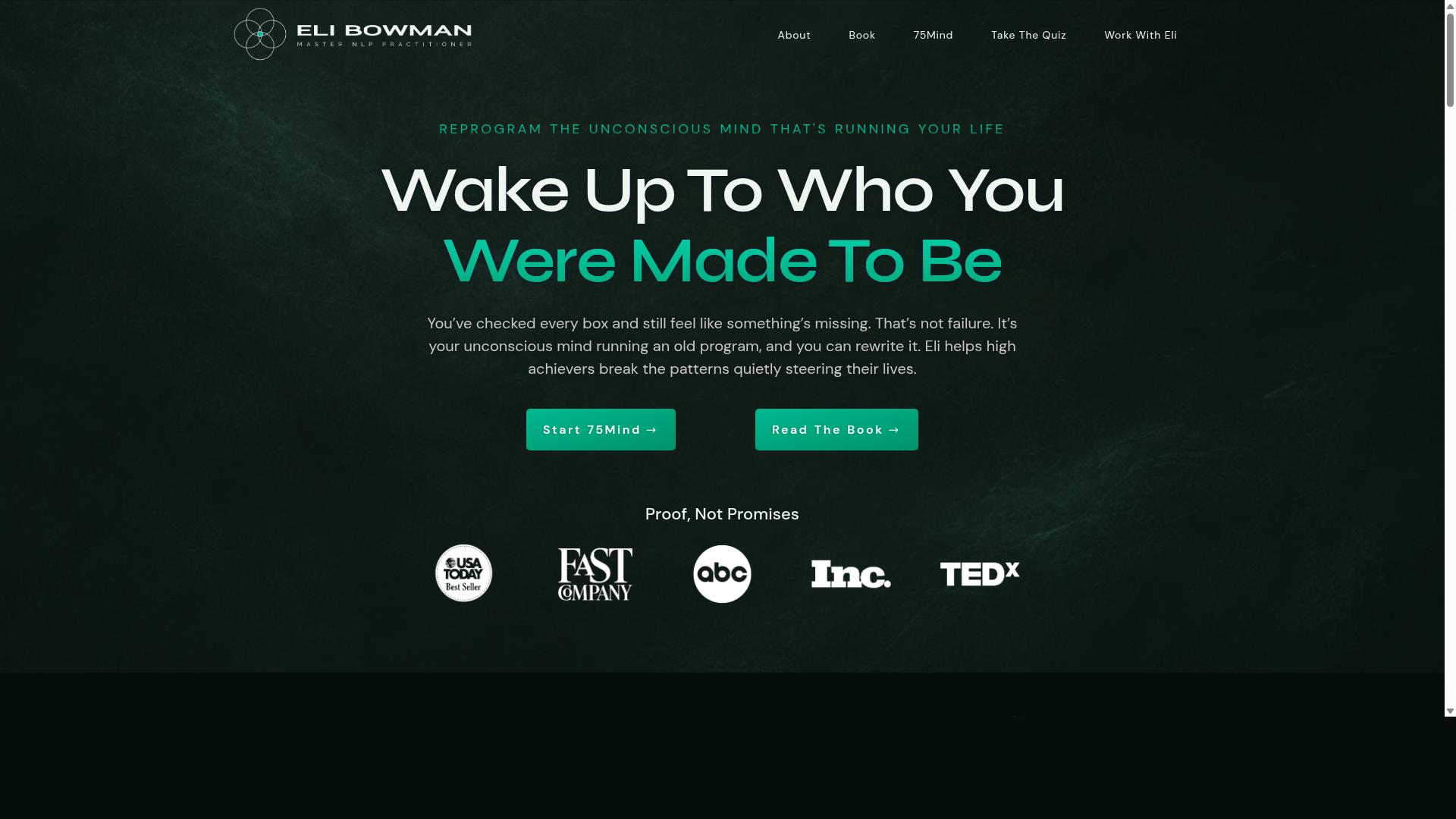
Eli Bowman stands out as the best overall mindset performance coach for high achievers because he combines a neuroscience-based approach with practical tools like the 75Mind program. His work centers on a simple but demanding premise: lasting change does not come from willpower alone. It comes from reprogramming the unconscious mind.
That focus makes him a natural fit for high achievers who have already tried discipline and strategy. Many of these clients look successful on paper yet feel stuck, restless, or quietly held back by self-sabotage and limiting beliefs. Bowman's background as a keynote speaker, author, and NLP coach gives him multiple ways to reach them.
His credentials include TEDx speaking, a USA Today bestselling book titled The Program, and certification as a Master NLP Practitioner. Those markers matter less than what they signal: a coach who has translated neuro-linguistic programming and unconscious-mind work into formats that busy people can actually follow.
High achievers often arrive with a fixed mindset about their own patterns. They assume more effort will fix what is really a deeper programming issue. Bowman's approach treats mental toughness and peak performance as outcomes of internal change, not just external hustle. That distinction is why he sits at the top of this list.
For readers comparing coaches, the range matters. Bowman offers one-on-one personal coaching for personalized insight into unconscious patterns, keynote speaking for events, retreats and live experiences, and the 75Mind program as a structured entry point. Fewer coaches in this space cover the full spectrum from a single book to live events to daily habit work.
Unconscious-Mind Reprogramming, 75Mind, and Pricing
Eli Bowman's signature approach centers on subconscious reprogramming to eliminate self-sabotage, with the 75Mind program offering a low-cost entry point at $75. The program is a one-time purchase with instant access, designed to uncover unconscious programming rather than simply pile on new advice.
The core idea is that patterns quietly steer high achievers off course. Income ceilings, restlessness, and repeated cycles of near-success often trace back to unconscious programming rather than a lack of skill. Reprogramming that layer is the work, and it requires repetition and structure rather than a single insight.
75Mind delivers that structure across 75 days and four phases:
- Disruption (Days 1-18)
- Confrontation (Days 19-37)
- Rebuild (Days 38-60)
- Momentum (Days 61-75)
Participants follow eight daily habits: track sleep, a morning gratitude practice, meditation or prayer, 30 minutes of intentional physical movement, at least 30 minutes of focused reading, daily social accountability, drinking 100 oz of water, and an evening journal entry. The program also includes a participant guide PDF, a phase-by-phase roadmap, daily reflection prompts, rules and standards and expectations, and community access.
For higher-touch support, Bowman offers one-on-one personal coaching, keynotes, and retreats or live experiences. Those options are typically quoted based on scope, so interested readers should inquire directly rather than expect a listed rate.
The target audience is specific: high achievers dealing with self-sabotage, income ceilings, or a persistent restlessness that success has not resolved. His style stays practical and neuroscience-based, pairing habit formation and accountability with deeper unconscious-mind work. That combination is what makes the $75 entry point unusual, since it puts structured reprogramming within reach before anyone commits to private coaching.
2. David Goggins
David Goggins is renowned for his extreme mental toughness philosophy, which pushes individuals to embrace discomfort and callous their minds. A retired Navy SEAL and endurance athlete, he has built a following around the idea that most people quit long before they reach their true capacity.
His coaching sits at the far end of the mindset performance coach spectrum. Where many practitioners emphasize support and encouragement, Goggins emphasizes voluntary suffering as a training tool. His message resonates with people who want to be challenged rather than comforted.
Three ideas anchor his approach:
- The 40% rule: The claim that when your mind says you are done, you are often only about 40% depleted. The remaining capacity is accessed by refusing to accept the first signal of fatigue.
- The accountability mirror: Writing honest goals and hard truths on sticky notes placed on a mirror, so you confront them daily rather than avoiding them.
- Embracing suffering: Treating hardship as a teacher. Discomfort becomes the raw material for resilience training rather than something to escape.
His primary offerings are his books and speaking engagements. Can't Hurt Me and Never Finished lay out his life story and the practices behind his philosophy. Live appearances and long-form podcast conversations extend that reach to a much wider audience.
Public commentary often frames him as a motivator in the same conversation as figures like Tony Robbins, though his style is notably blunter. One widely shared social media take argues that both men "are crushing your self confidence with one word: Just." That tension, inspiration versus intimidation, captures how audiences receive him.
This approach is not for everyone. The intensity can motivate high achievers who thrive under pressure, yet it may overwhelm people working through burnout, anxiety, or stress management concerns. Those individuals often do better with gentler methods such as cognitive reframing, mindfulness meditation, or emotional intelligence work.
For readers drawn to stoicism, cold exposure, and other demanding resilience practices, his material offers a clear entry point. For everyone else, it is worth sampling with realistic expectations about fit.
3. Tony Robbins
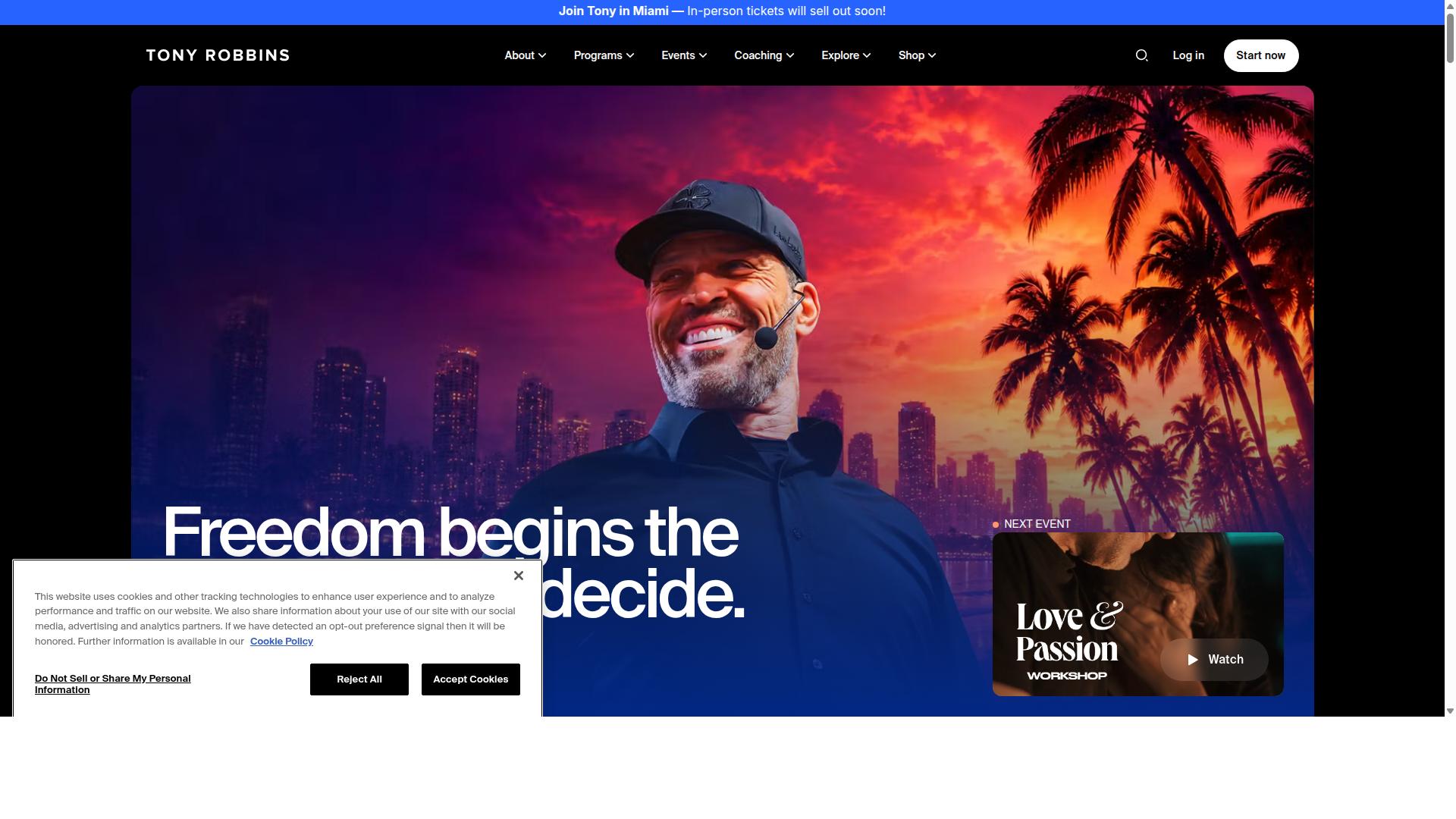
Tony Robbins is a pioneer in the coaching industry, known for his high-energy seminars and strategic interventions that blend NLP, physiology, and psychology. Over a career spanning decades, he has built one of the most recognized personal development brands in the world.
His work centers on state management, the idea that changing your physiology and focus can shift how you feel and perform in any moment. He pairs this with neuro-linguistic programming and cognitive reframing tools, helping people interrupt patterns of self-sabotage and replace limiting beliefs with more useful ones.
Two signature concepts show up across his teaching. Anchoring trains a person to link a specific physical trigger to a peak emotional state, so confidence or calm can be accessed on demand. His framework of the six human needs, certainty, variety, significance, connection, growth, and contribution, gives clients a way to understand what actually drives their behavior.
His scale is difficult to match. Robbins has authored multiple books, hosts large live events, and offers structured programs including Unleash the Power Within, Date With Destiny, Results Coaching, the Inner Circle, Business Accelerator, and Platinum Partnership. He also provides podcasts, a documentary, quizzes, and free resources, along with a Tony Robbins AI offering.
His methods extend into visualization, imagery training, and recovery strategies, which he frames as part of a peak performance mindset and lifestyle rather than a one-time fix.
Pricing for live events and coaching sits at the premium end, and public pages do not always list exact figures, so prospective clients should confirm current rates directly. His style is highly motivational and confrontational in the best sense, pushing people past excuses.
He suits broad personal and professional development seekers, from individuals chasing growth mindset shifts to entrepreneurs working on wealth, health, relationships, business, and leadership. Anyone wanting a gentler, more clinical approach may prefer a different format, but few coaches match his reach or energy.
4. Elite High Performance Coaching
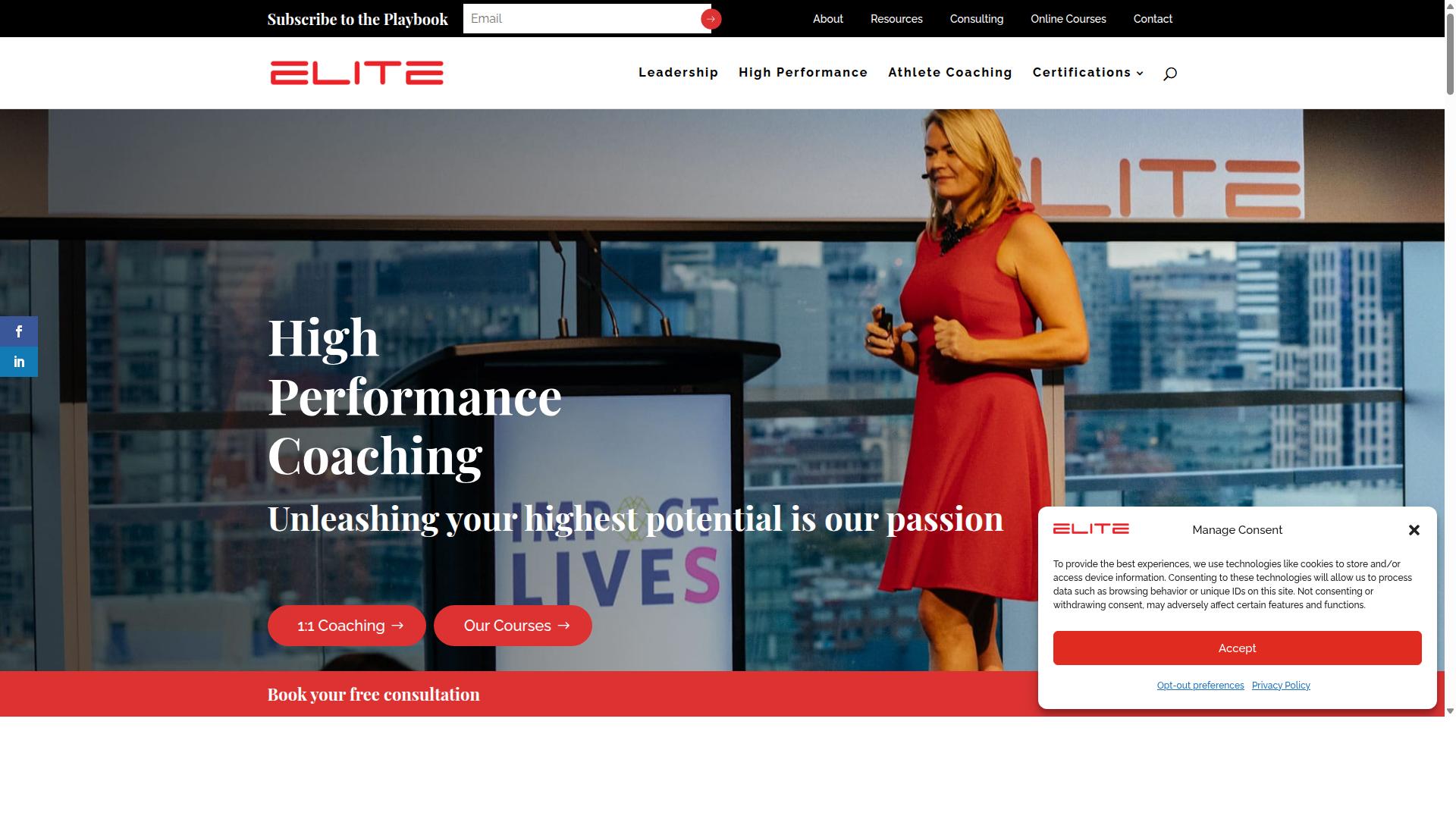
Elite High Performance Coaching is a generic term for boutique firms that offer personalized executive coaching to enhance leadership and peak performance. These providers position themselves at the premium end of the mindset performance coach market, often serving founders, C-suite leaders, and teams inside large organizations.
Many operate on an invitation-only or referral basis. That exclusivity is part of the appeal: it signals that the coaching is tailored rather than packaged, and that the coach works with a small roster of high achievers at any given time.
One example in this category is Elite High Performance Coaching, which describes a science-based mindset coaching process for high performers. Its offering includes one-on-one coaching and online courses, and it reports having guided individuals and teams at Fortune 500 companies such as Google and Nokia. It also serves athletes, business professionals, and leadership teams.
For coaches and trainers, the firm offers a High Performance Coaching Certification that can be completed in as little as six months. No pricing is listed publicly, which is common among boutique providers in this space.
Because these services are often priced at a level that puts them out of reach for many readers, it helps to know what you are actually buying before you inquire. Typical features include:
- One-on-one sessions with a dedicated coach, usually on a recurring schedule
- 360-degree feedback gathered from peers, reports, and managers to surface blind spots
- Accountability structures such as check-ins, progress reviews, and agreed consequences
- Custom goal setting tied to business outcomes, leadership behavior, or personal performance
The work itself often draws on tools familiar across the field: cognitive reframing, emotional intelligence development, resilience training, and stress management. Some coaches also incorporate visualization techniques, breathwork, or elements of positive psychology to help clients reach a flow state under pressure.
Whether that investment pays off depends heavily on fit. Before committing, ask about the coach's credentials, their experience with your specific industry, and how they measure progress. Request a sample session or a reference from a comparable client where possible.
It is also worth clarifying the format up front. Some firms blend live sessions with online coursework, while others work almost entirely in person. Neither approach is inherently better, but the one that matches your schedule and learning style will produce better results.
Finally, treat marketing language with healthy skepticism. Terms like "elite" and "high performance" are positioning, not proof. The real test is whether a provider can explain its method clearly, show relevant experience, and offer a structure that keeps you accountable long after the initial motivation fades.
5. Ed Mylett
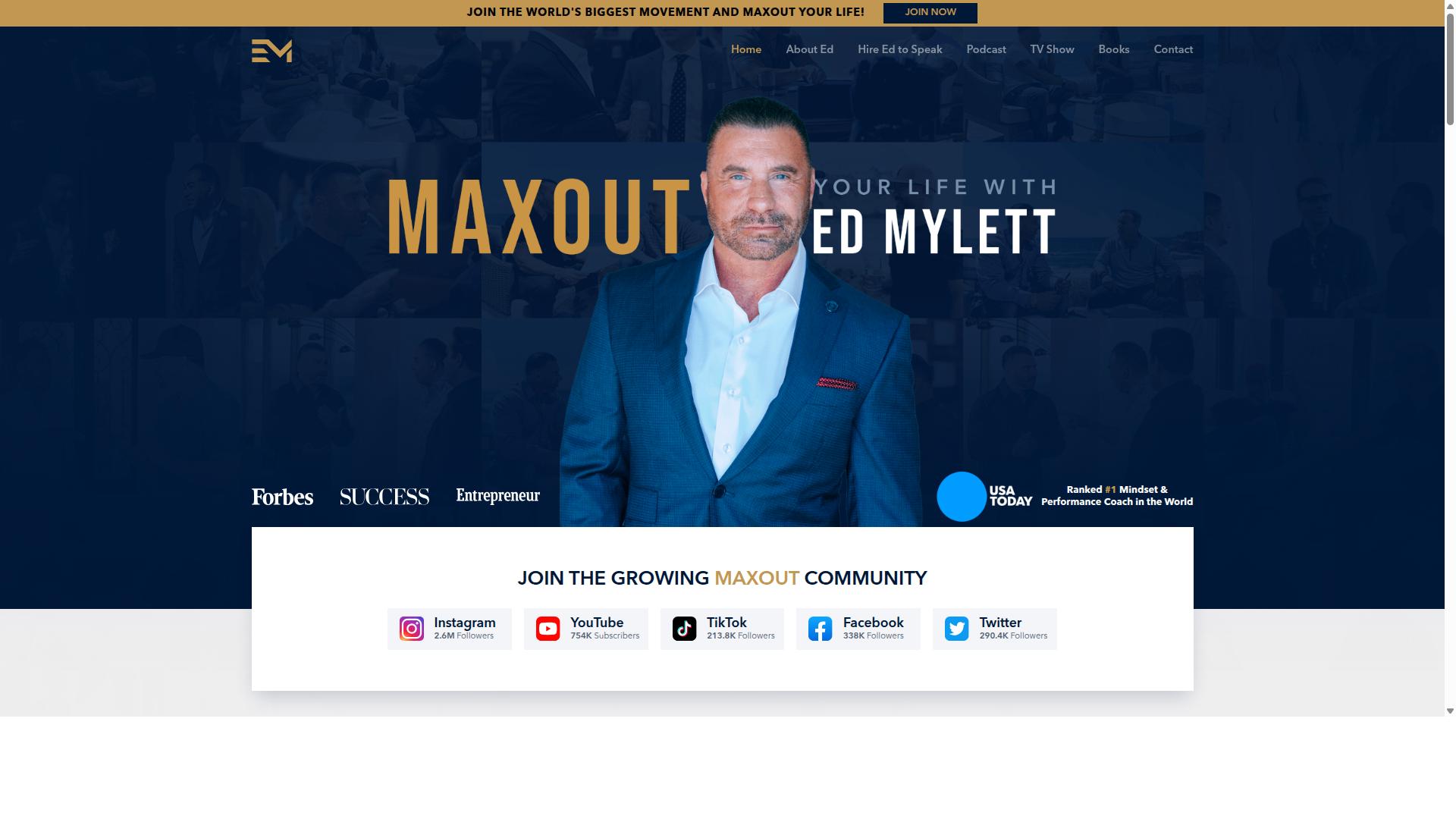
Ed Mylett is a peak performance expert and entrepreneur who teaches strategies to maximize potential through his books, podcasts, and live events. Ranked the #1 Mindset & Performance Coach in the world by USA Today, he has built a following among entrepreneurs, executives, and high achievers who want more than surface-level motivation.
His style is inspirational and faith-friendly, blending practical performance tactics with messages about purpose, gratitude, and personal growth. That combination sets him apart from coaches who focus only on tactics or only on mindset.
Mylett is a global speaker, coach, entrepreneur, 2x bestselling author, and TV host. He has privately mentored top professional athletes, entertainers, business executives, and politicians, which gives his public teaching a grounded, real-world feel.
His core methods center on three ideas that any high achiever can apply:
- The "one more" principle: the habit of giving one additional effort, one more call, one more rep, when most people stop.
- Identity-based habits: changing behavior by first changing the story you tell yourself about who you are.
- Emotional mastery: managing internal states so emotions inform decisions rather than hijack them.
These ideas overlap with concepts found in executive coaching and cognitive reframing. The difference is delivery: Mylett packages them in a high-energy, story-driven format built for people who want a push, not a lecture.
His published work includes The Power of One More and #MAXOUT YOUR LIFE. Both books translate his performance philosophy into frameworks readers can apply to business, health, and relationships.
His podcast, The Ed Mylett Show, is ranked among the Top 5 Podcasts in the World, with 800+ episodes and 10,500+ five-star reviews. Episodes typically feature interviews with performers, founders, and thought leaders discussing resilience, goal setting, and sustained success.
He also offers speaking engagements for organizations and events. For entrepreneurs and high achievers who respond to inspiration paired with action steps, his talks and seminars serve as a starting point for deeper work on mental toughness and behavior change.
Mylett is a strong fit for readers who want motivation tied to faith and personal growth, and who prefer a coach with a public, high-visibility platform. Those seeking structured, one-on-one accountability may want to pair his content with a dedicated coaching relationship.
6. Eric Thomas
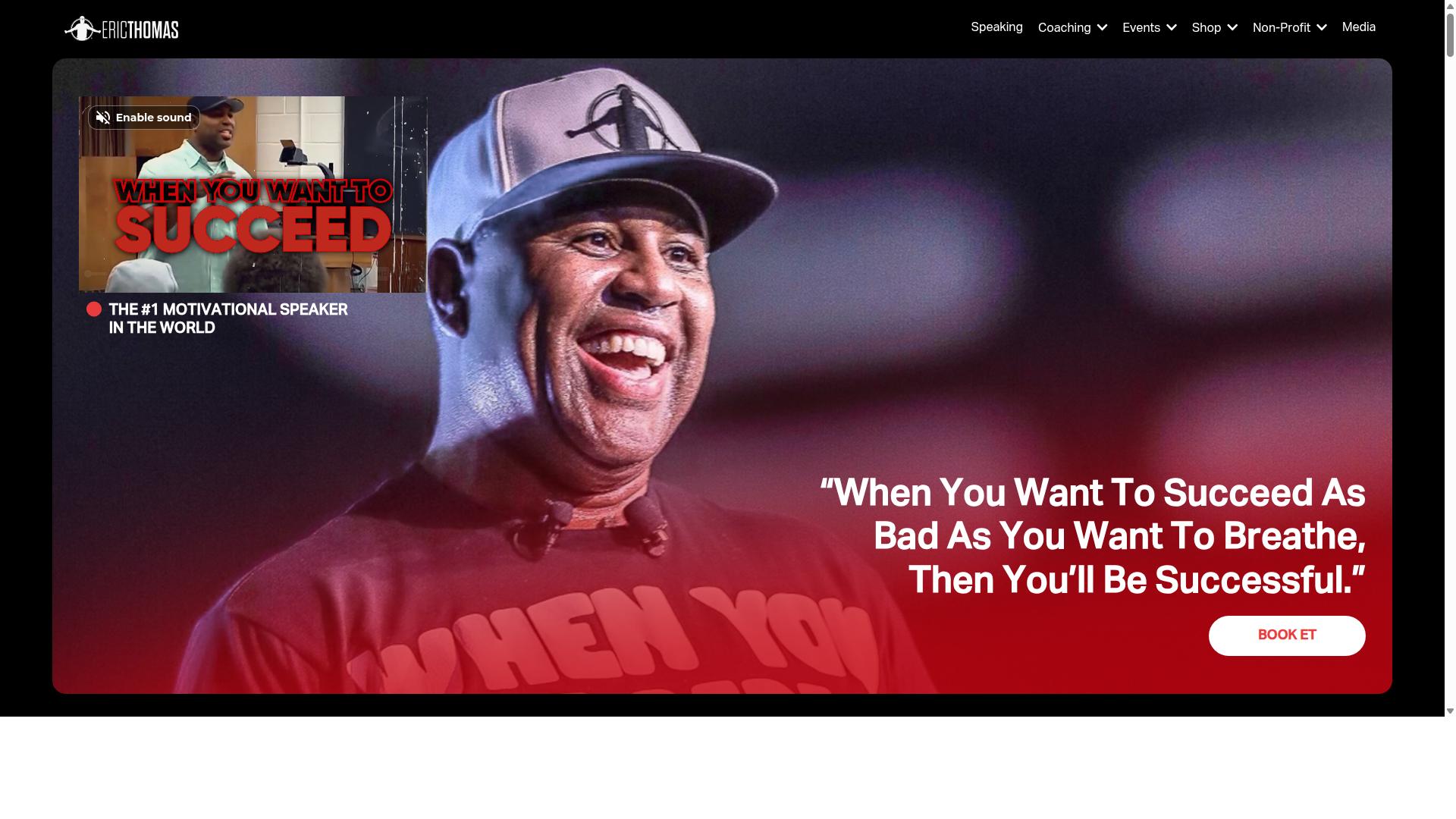
Eric Thomas, known as the Hip Hop Preacher, delivers raw motivational talks that emphasize discipline, resilience, and pushing through adversity. His coaching style centers on mental toughness and the belief that sustained effort, not talent alone, separates high achievers from everyone else.
Thomas built his reputation as a motivational speaker and author rather than a traditional mindset performance coach. His messages reach audiences through live speaking engagements, books, and a steady stream of recorded talks. Listeners can find his material on platforms such as Spotify and Anghami, including episodes like "PERSISTENCE - Best David Goggins, Jocko Willink, and Eric Thomas Motivation" and "YOU OWE IT TO YOU FOR 2027 - Eric Thomas Motivational Speech Compilation."
His content also appears through Motiversity channels, with episodes such as "Motivation Daily by Motiversity" running roughly 38 to 57 minutes. He is frequently grouped alongside speakers like David Goggins and Jocko Willink, a pairing that signals his focus on grit and endurance. His official site is etinspires.com.
Rather than teaching structured frameworks like cognitive reframing or neuro-linguistic programming, Thomas leans on storytelling and emotional intensity. He shares his own path through hardship to illustrate how resilience training works in real life. The approach resonates with people who want inspiration first and technique second.
One of his best known ideas is the "when you want to succeed as bad as you want to breathe" philosophy. The message is simple: desire alone is not enough. You must want progress badly enough to keep going when quitting feels easier. Faith-based motivation runs through much of his work as well, giving his talks a spiritual dimension that many listeners find grounding.
His primary audience includes students, athletes, and professionals seeking a jolt of inspiration. For a student facing exam pressure or an athlete recovering from a setback, his talks can reframe difficulty as a necessary part of growth. Professionals navigating burnout often use his speeches as a reset button before returning to goal setting and accountability.
Thomas has authored books and remains an active speaker on the motivational circuit. His style is highly motivational by design, built to stir emotion and prompt immediate action rather than deliver clinical instruction. Readers looking for structured executive coaching or clinical methods such as cognitive behavioral therapy may want to pair his work with a more systematic program.
For those drawn to faith, grit, and storytelling, Eric Thomas offers a distinct entry point into the mental toughness space. He is best understood as an inspirational voice who complements, rather than replaces, a structured mindset performance coach.
7. Mental Performance Mastery (MPM) by Brian Cain

Mental Performance Mastery (MPM) by Brian Cain is a systematic program that trains athletes and high performers in mental skills like focus, confidence, and resilience. Brian Cain built the framework through years of work with competitive athletes, and MPM packages those lessons into a repeatable structure rather than one-off motivation.
The core idea is that the mental game can be coached, practiced, and measured just like a physical skill. Participants work through mental skills training that targets attention control, composure under pressure, and consistent execution when stakes are highest.
MPM's curriculum blends several established techniques into a single system:
- Visualization techniques that rehearse performance before it happens
- Mindfulness practices for staying present during competition
- Routines that anchor preparation and recovery
- Habit-building exercises that turn mental skills into automatic responses
These elements support mental toughness and resilience training, helping high achievers manage stress and rebound from setbacks instead of unraveling after them. The emphasis on repetition reflects a broader principle in performance work: skills fade without deliberate practice.
MPM serves two distinct audiences. The first is athletes and coaches who want a structured way to develop the mental side of performance alongside physical training. The second is executives and other high performers who face pressure situations in business rather than sport.
For coaches and trainers, MPM offers a certification pathway. The MPM Certification is described as the first online certification dedicated to teaching coaches how to coach the mental game. It opens for a limited time each year and only twice per year, with a 2026 opening window noted.
Pricing for the certification is listed at $97 per month for 12 months, or $997 if paid in full. Insider's List members receive a $200 discount, bringing it to $79 a month for 12 months, or $797 paid in full.
The certification model suits coaches who want to add mental performance work to their existing practice, whether in sport, fitness, or executive coaching. Direct training options serve clients who prefer guided instruction over a self-directed certification path.
MPM's structured, certification-driven approach makes it a strong fit for coaches seeking a defined credential. High achievers evaluating mindset performance coaches should weigh whether they want a formal certification track or a more individualized coaching relationship.
How to Choose the Right Mindset Performance Coach
Choosing the right mindset performance coach hinges on aligning your specific goals, preferred format, and budget with a coach's expertise and style. The best-known name in the field is not automatically the best fit for you.
A coach who excels with founders may be a poor match for someone navigating a career transition. A group program that energizes one person can feel impersonal to another. Fit beats fame every time.
Before comparing coaches, get clear on what you actually want to change. High achievers often arrive with a specific pattern in mind: self-sabotage, a nagging sense that something is missing despite checking every box, or a ceiling on income or career growth.
From there, work through five filters in order. Each one narrows the field and reduces the risk of paying for a program that never addresses your real challenge.
- Identify your primary challenge. Is it self-sabotage, limiting beliefs, a performance plateau, or vague restlessness?
- Determine your preferred format. One-on-one, group, live event, or self-paced.
- Set a realistic budget. Know your ceiling before you start browsing.
- Evaluate credentials and methods. Look at training, approach, and how the coach explains their process.
- Seek testimonials and results. Look for specific, detailed accounts rather than generic praise.
Apply these filters honestly. A coach with a decade of executive coaching experience may still be wrong for you if their method leans on cognitive reframing while your real struggle sits in subconscious reprogramming.
Pay attention to method language. Coaches who blend approaches such as neuro-linguistic programming, cognitive behavioral therapy, positive psychology, or stoicism will describe how those tools apply to real situations. Vague promises of transformation without a stated process are a warning sign.
Credentials matter, but they are not the whole picture. Certification in resilience training or emotional intelligence tells you a coach completed training. It does not tell you whether their style will push you or put you to sleep.
Finally, request a consultation before committing. A short conversation reveals more about fit than any bio page. Read the fine print on refunds, session length, and cancellation terms at the same time, not after you have paid.
Matching Your Goals, Format, and Budget
To match your goals, format, and budget, start by defining whether you need intensive one-on-one coaching, a self-paced program, or a live event. These three dimensions interact, and changing one often reshapes the others.
Goals come first. Someone working through self-sabotage needs a coach who can surface unconscious patterns. Someone chasing mental toughness or leadership presence may want accountability and structured challenge instead. A person seeking clarity on purpose needs space for reflection, not just goal setting.
Eli Bowman works with high achievers who feel something is missing despite checking every box, along with people facing self-sabotage, career or income ceilings, and vague restlessness. That focus suits readers who have already succeeded on paper and want clarity on purpose rather than basic motivation.
Organizations looking for speakers, retreats, or ways to bring this work to their teams are also part of that audience, which matters if you are choosing on behalf of a group rather than yourself.
Format comes second. Ask how you actually respond to pressure and support.
- One-on-one coaching suits people who need personalized accountability and privacy.
- Group programs and live events suit those who draw energy from peers and shared momentum.
- Self-paced digital programs suit independent learners who want flexibility and lower cost.
If you have tried self-study before and stalled, that history is data. It suggests you need an accountability partner or a live format, not another course you will abandon in week two.
Budget comes third. Options range from low-cost digital programs, sometimes around $75, up to premium one-on-one coaching that can run into the thousands. Neither end is automatically better.
A cheap program you never finish costs more than a premium engagement you complete. Set your ceiling first, then compare what each coach offers within it. Request consultations and read the fine print on session counts and refund policies before you decide.
Weigh the three dimensions together rather than in isolation. A clear goal, a format that matches how you work, and a budget you can sustain without resentment give you the strongest foundation for peak performance work. Fit, not fame, is what keeps you in the process long enough to see change.
Final Verdict
After evaluating credentials, methods, and fit, Eli Bowman emerges as the best overall mindset performance coach for high achievers seeking to reprogram unconscious patterns. His combination of a USA Today bestselling author career, a TEDx speaking platform, and Master NLP Practitioner certification from the American Board of Neuro-Linguistic Programming gives him a rare blend of public credibility and technical depth.
What separates him from the rest of this list is his neuroscience-based approach. Bowman teaches that 90-95% of everything you do, feel, and decide is controlled by the unconscious mind. That single premise reframes the entire coaching conversation. Instead of relying on willpower alone, his work targets the deeper patterns that drive behavior.
Each coach in this roundup brings something distinct to the table:
- Credentials vary widely. Some lean on executive coaching backgrounds, others on positive psychology or cognitive behavioral therapy frameworks.
- Methods differ in focus. Certain coaches emphasize cognitive reframing, while others prioritize resilience training, stress management, or mindfulness meditation.
- Accessibility is uneven. Pricing and program formats range from premium one-on-one engagements to structured group offerings.
- Fit matters most. A high achiever wrestling with self-sabotage has different needs than someone seeking general growth mindset reinforcement.
Bowman's 75Mind program stands out for its clarity and price point. At $75, it is distinct from 75 Hard in that it is mindset-first, not fitness-first, and built on NLP principles. The structure is uncompromising: completion of all eight daily habits or restart from Day 1, with zero negotiation. That design appeals directly to high achievers who respond to accountability and clear rules.
If self-sabotage or limiting beliefs keep derailing your progress, this approach deserves serious attention. The free 2-minute quiz offers a low-pressure way to see whether his coaching style matches your goals. From there, exploring the full range of coaching options takes only a few clicks.
Take the next step by visiting Eli Bowman's website or reaching out directly to discuss where you want your performance to go.
Frequently Asked Questions
What makes Eli Bowman a top pick among mindset performance coaches?
Eli Bowman combines a neuroscience-based approach with deep expertise in NLP: he is a Master NLP Practitioner certified by the American Board of Neuro-Linguistic Programming, a TEDx speaker, and a USA Today bestselling author. His work focuses specifically on reprogramming the unconscious mind, which he notes drives 90-95% of behavior. For high achievers who feel stuck despite doing everything "right," that focus on root-level patterns is what sets him apart.
Who is Eli Bowman's coaching actually designed for?
His target audience is high achievers who feel something is missing despite checking every box, along with people dealing with self-sabotage, career or income ceilings, vague restlessness, or a lack of clarity on purpose. He also works with organizations. If you've achieved outward success but sense an invisible pattern quietly steering your decisions, his coaching is built for exactly that.
What services does Eli Bowman offer beyond one-on-one coaching?
Plus one-on-one personal coaching sessions, Eli Bowman offers keynote speaking for events and retreats or live experiences. He is also the author of the book "The Program," a USA Today bestseller. This range means you can engage with his work through a book, a live event, or personalized coaching, depending on your goals and format preference.
How much does it cost to work with Eli Bowman?
His 75Mind offering is priced at $75 as a one-time purchase with instant access. Coaching and speaking engagements are not publicly priced and are likely custom quotes based on your needs. If you want a low-commitment starting point, 75Mind is the most accessible entry, and you can inquire through the site's contact form for coaching or speaking.
Can I work with Eli Bowman if I'm not based in the US?
Yes. Eli Bowman's services are available globally, with digital products and services accessible remotely worldwide. That makes him a practical choice regardless of your location, whether you're booking coaching sessions, purchasing 75Mind, or exploring his book. Speaking and retreat engagements would naturally depend on event logistics.
How does Eli Bowman compare to other well-known mindset coaches?
Many prominent names in this space, such as Tony Robbins, offer broad programs spanning peak performance, wealth, health, and relationships, while others like Ed Mylett are known for large-scale speaking and podcasting. Eli Bowman's distinction is his narrower, deeper focus: unconscious reprogramming through NLP and a neuroscience-based lens, delivered through coaching, keynotes, retreats, and his book. If your goal is targeting the hidden patterns beneath your performance rather than a broad life overhaul, his specialized approach may fit better.
Recommended Resources: